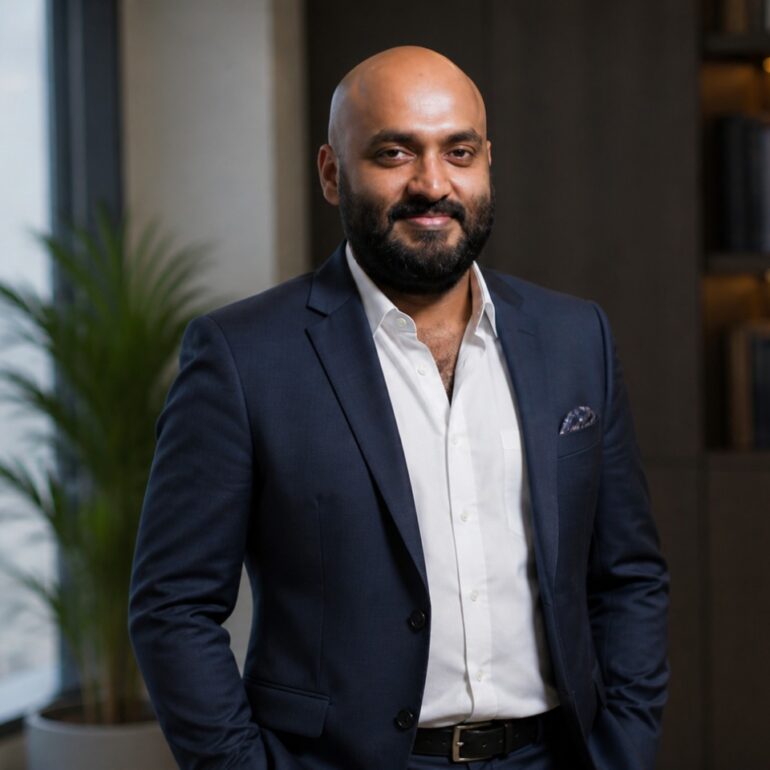
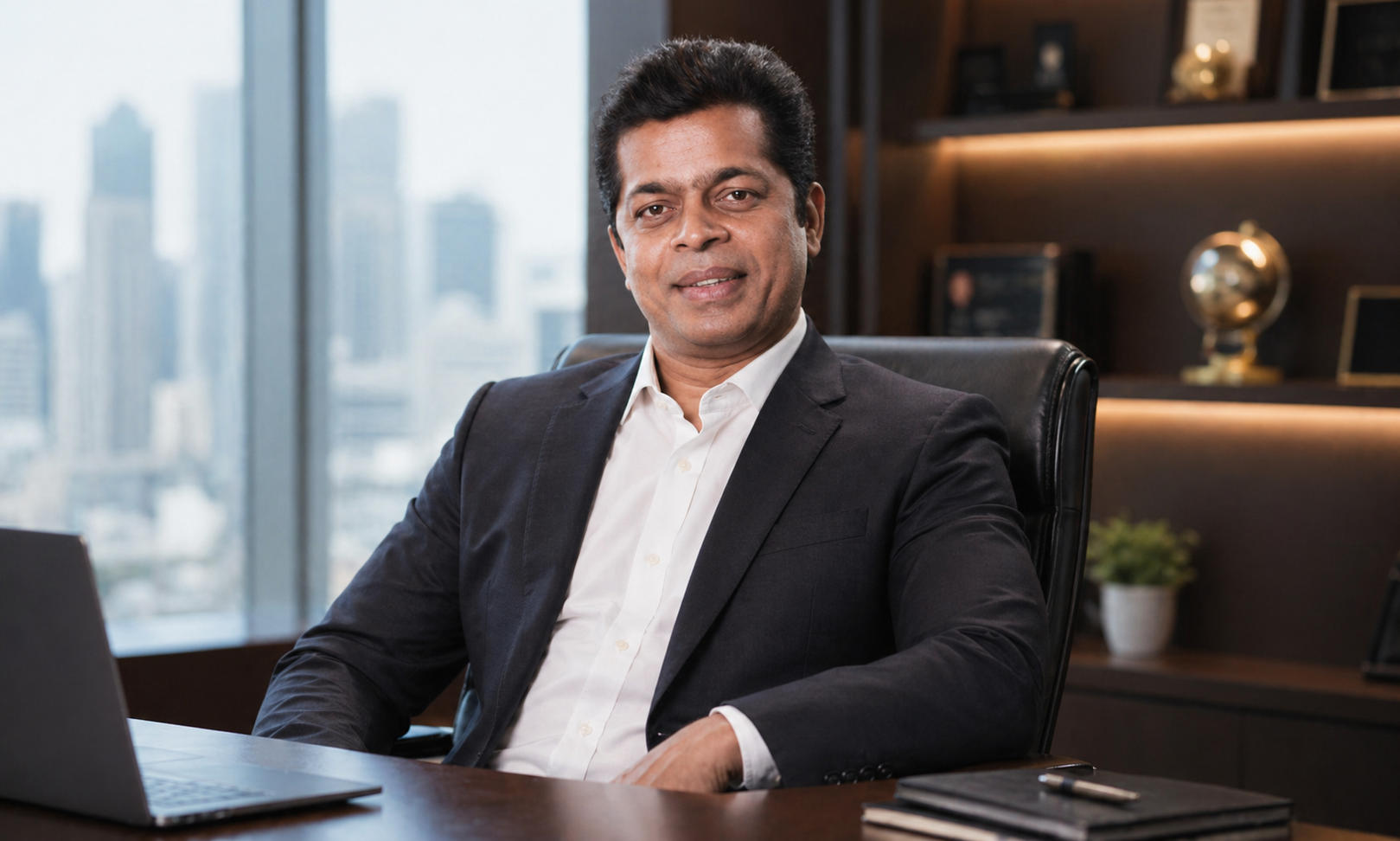
Shrikant Bhasi
Indian entrepreneur
Shrikant Bhasi is an Indian entrepreneur. He is also the founder and chairman of the Carnival Group, a diversified corporate group with interests in multiplex, media, entertainment, hospitality and real estate.
As the founder and chairman of the Carnival Group, Bhasi led one of the most aggressive expansion plays in India’s multiplex business. The arc of his career, marked by rapid growth and equally sharp reversals, captures an outstanding mix of ambition, risk, and the structural challenges of India’s media economy.
Key Facts
Full Name: Shrikant Bhasi
Born: 23 November 1968
Place of Birth: Angamaly, Kerala, India
Education: Commerce graduate, Barkatullah University
Title: Founder and Chairman of Carnival Group
Occupation: Entrepreneur, Business Leader
Known For: Building one of India’s largest multiplex chains through acquisitions
Kerala Roots and Early Ambition
Angamaly, located near Kochi, has long been a node in Kerala’s trading and migration networks. For Shrikant Bhasi, growing up here meant exposure to a culture where entrepreneurship was not uncommon, even if resources were limited.
His family background, while not widely documented in detail, placed him within a milieu that valued business acumen and adaptability. Kerala’s socio-economic structure, particularly in the late 20th century, was shaped by outward migration and inward remittances, creating a hybrid economy where local enterprise coexisted with global exposure.
Bhasi’s education in commerce at Barkatullah University provided a formal grounding, but his trajectory would be shaped more by experience than by academic specialization.
Corporate Life and Early Setbacks
Bhasi began his career at Britannia Industries, working in the agri-division. This role offered exposure to supply chains, distribution networks, and corporate structures.
However, the early 1990s were a period of economic transition in India. Liberalization was reshaping markets, and opportunities for entrepreneurship were expanding.
In 1992, Bhasi left Britannia to pursue his own venture, entering the soybean processing business. The decision reflected both ambition and timing, agri-based industries were seen as promising in a liberalizing economy.
The venture, however, did not succeed. Policy changes and market dynamics disrupted the business, leading to its eventual collapse. This early failure is critical in understanding Bhasi’s later approach. It underscored the unpredictability of regulatory environments and the risks inherent in capital-intensive ventures.
Rather than retreat, he recalibrated.
Reinvention and Entry into Entertainment
Bhasi’s shift from traditional industry to media and entertainment was not immediately obvious. The move required a rethinking of both market dynamics and personal expertise.
The insight that drove this transition was structural, India had a large population but relatively few cinema screens per capita. Compared to global benchmarks, the exhibition sector was underdeveloped.
This gap suggested opportunity, but also complexity. Film exhibition depends on multiple variables, real estate, content supply, consumer behavior, and regulatory approvals.
Bhasi’s entry into this sector reflects a willingness to operate in uncertain but potentially high-growth environments.
Building the Empire: Carnival Cinemas
The first theatre under the Carnival brand in Angamaly marked the beginning of Bhasi’s journey in film exhibition. The choice of location was strategic, starting in a familiar market before expanding outward.
Growth, however, did not rely solely on organic expansion. Bhasi adopted an acquisition-driven strategy, targeting distressed or underperforming assets.
The acquisition of theatre chains associated with entities like HDIL’s Broadway chain and Reliance MediaWorks Big Cinemas, linked to Anil Ambani, significantly accelerated scale. Another notable acquisition involved Glitz Cinemas, associated with the Network18 ecosystem.
Through these moves, Carnival Group expanded rapidly, reportedly reaching hundreds of screens across India. At its peak, the company was positioned among the country’s largest multiplex operators.
This phase reflects a classic consolidation strategy, acquiring assets at scale to build market presence quickly.
Diversification: Carnival Media and Food Ventures
Bhasi’s ambitions extended beyond exhibition. In 2011, he launched Carnival Media, expanding into live events, television, and film-related activities.
This diversification aimed to create an integrated media ecosystem, where content, distribution, and exhibition could be aligned.
Parallelly, ventures like Travancore Foods India Pvt Ltd attempted to enter the food and beverage space, with café brands such as D’Bell and Cafe Sabrosa. These initiatives, however, did not sustain long-term operations and were eventually shut down.
The diversification strategy highlights both ambition and risk. Expanding into adjacent sectors can create synergies, but also stretches managerial and financial resources.
The Expansion Playbook
Bhasi’s growth strategy combined organic expansion with aggressive acquisitions. Initiatives like “Project Jalsa” reportedly aimed at expanding into smaller cities and underserved markets.
The vision of scaling to 1,000 screens reflected a belief in the long-term growth of India’s exhibition sector. This vision aligned with broader industry trends, increasing urbanization, rising disposable incomes, and a growing appetite for entertainment.
However, such expansion required significant capital. Financing acquisitions and maintaining operations across a large network introduced financial complexity.
Crisis and Collapse
The COVID-19 pandemic in 2020 exposed structural vulnerabilities in the multiplex business. With theatres shut for extended periods, revenue streams collapsed while fixed costs remained.
For Carnival Group, which had expanded rapidly, the impact was particularly severe. Reports indicated mounting debt and operational challenges.
Subsequent developments included insolvency proceedings and the closure of several screens. While precise financial details vary across reports, the broader narrative is clear, the combination of high leverage and external shocks proved difficult to sustain.
This phase underscores a critical aspect of Bhasi’s journey, the risks associated with aggressive scaling in capital-intensive industries.
Leadership, Risk, and Controversy
Shrikant Bhasi’s leadership style is often described as bold and risk-oriented. His willingness to pursue large acquisitions set him apart in an industry where many players expanded more cautiously.
However, this approach also attracted criticism. Industry observers have pointed to over-expansion and financial structuring as factors that contributed to later challenges.
Bhasi’s trajectory reflects a broader tension in Indian entrepreneurship, the balance between ambition and sustainability.
Legacy and Unfinished Narrative
Despite the setbacks, Bhasi’s impact on India’s exhibition sector is significant. By consolidating fragmented assets and expanding into underserved markets, he contributed to increasing screen availability.
His journey also highlights the cyclical nature of the media business. Periods of rapid growth are often followed by consolidation and correction.
In the broader context of Indian entrepreneurship, Bhasi’s story is not an anomaly. It reflects the realities of operating in dynamic, capital-intensive sectors where external shocks can alter trajectories.
What remains is a narrative that is both instructive and unresolved. The scale of his ambition reshaped parts of the industry, even as its sustainability came under strain.
In that duality, achievement and challenge, lies the essence of his journey. It is a story that captures the possibilities and limits of entrepreneurial expansion in modern India, and in its scope and complexity, it remains undeniably outstanding.
Awards
2015 – NIB Award for Business Icon of the Year by Ernakulam Press Club and Public Relations Council of India at Kochi
2015 – “50 Inspiring Entrepreneurs of India” at The Economic Times India Entrepreneurship Summit at Delhi
2014 – Entrepreneur of the Year at the Dhanam Business Awards by Dhanam Magazine at Kochi
2015 – Outstanding Achievement Award at CMO Asia Multiplex Excellence Award