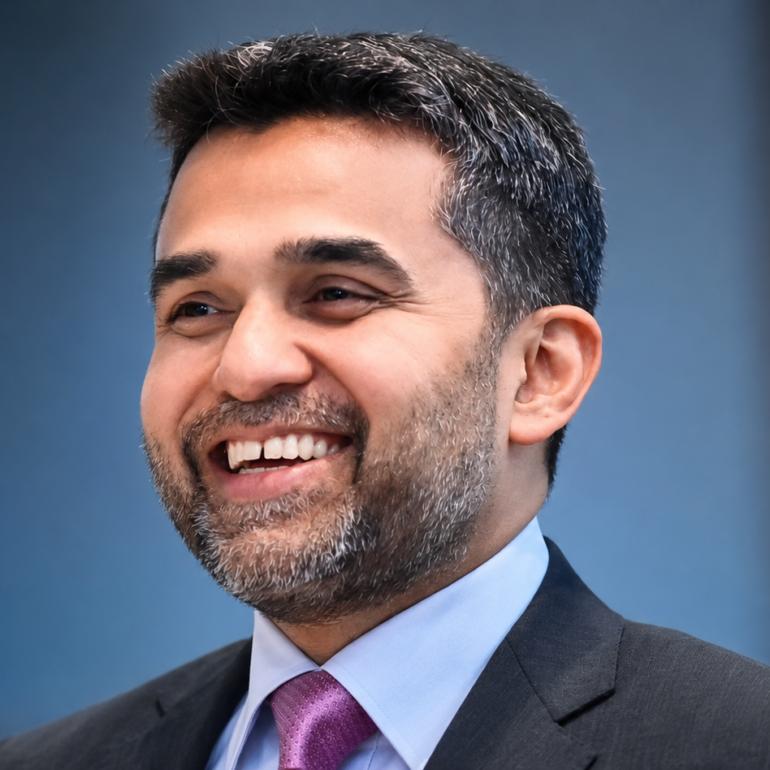
Navas Meeran
CEO of Eastern Condiments and Chairman of the Meeran Group
Navas Meeran, serving as CEO of Eastern Condiments and Chairman of the Meeran Group, is a commerce graduate who has significantly elevated his family business in Kerala to its current prominence. Navas Meeran has served in several executive roles including Chairman of the Confederation of Indian Industries (CII) Southern Region, Director – Kerala State Industrial Development Corporation, Co-Chair – Innovation and Entrepreneurship Council, CII National Council and Member – Economic Growth and Investment Council, CII Southern Region.
Key Facts
Name: Navas Meeran
Title: CEO of Eastern Condiments & Chairman of the Meeran Group
The Smell of a Beginning
In 2020, as global markets reeled under uncertainty, a quiet but decisive transaction reshaped one of Kerala’s most familiar brands. The majority stake sale of Eastern Condiments to Orkla was not just a financial event. It was a signal, of intent, of transition, and of a philosophy that valued scale over sentiment. At the centre of that decision was Navas Meeran, a second-generation entrepreneur who chose evolution over preservation. For a company built on legacy, the move could have been seen as dilution. Instead, it marked an outstanding shift, from a regional stronghold to a global platform. To understand that choice is to understand the man, measured, strategic, and willing to disrupt his own inheritance.
Inheritance and Early Responsibility
Navas Meeran did not inherit a blank slate. He inherited momentum.
His father, M. E. Meeran, had already transformed a small trading venture into a recognizable household brand across Kerala. By the time Navas entered the business in the early 1990s, Eastern was no longer fragile, but it was far from institutionalized.
This distinction mattered. The company had scale, but its systems were still evolving. It had brand recall, but its organizational structure remained largely founder-driven. Like many family businesses of its era, decision-making was centralized, processes informal, and growth dependent on instinct.
For Navas, the early years were less about expansion and more about understanding these limits. He observed how distribution worked, how production scaled, and where inefficiencies lay. More importantly, he recognized a structural truth: what worked for a founder-led enterprise would not necessarily sustain a multi-generational business.
The challenge was not to grow faster. It was to grow differently.
Reinventing a Family Business
One of Navas Meeran’s most consequential decisions was to professionalize the organization.
This meant bringing in external talent, not just as advisors, but as decision-makers. It meant building systems where previously there had been discretion. It meant introducing accountability in a culture that was used to trust-based operations.
Such transitions are rarely smooth. Family businesses often resist external influence. Employees accustomed to informal hierarchies can find structured processes restrictive. There is also the emotional dimension, the sense that professionalization might dilute the founder’s ethos.
Navas approached this carefully but firmly. He did not dismantle the existing culture. He layered it with systems.
Hiring professionals across functions, finance, operations, marketing, he gradually shifted Eastern from a personality-driven enterprise to a process-driven one.
The cultural transformation was subtle but significant. Decisions became data-backed. Roles became defined. Growth became scalable. In retrospect, this phase laid the groundwork for everything that followed.
Expansion Beyond Spices
While Eastern remained the flagship, Navas Meeran was not content with a single vertical.
Under his leadership, Group Meeran diversified into multiple sectors, including mattresses, tea, housing, logistics, and other ventures. Each move reflected a broader philosophy: risk, when managed, is necessary for relevance.
Diversification in family businesses often follows one of two paths, opportunistic or strategic.
Navas’s approach leaned toward the latter. He sought adjacencies where operational knowledge or distribution strengths could be leveraged. At the same time, he did not shy away from experimentation, entering sectors that required new capabilities.
Not every venture delivered equally. Some scaled successfully. Others remained niche. But the underlying intent was clear, to reduce dependence on a single product category and build a portfolio of businesses that could evolve with market conditions.
This phase also reflected a shift in identity. Group Meeran was no longer just a spice company. It was becoming a diversified enterprise.
The Orkla Moment
The 2020 stake sale to Orkla stands as a defining moment in Navas Meeran’s career.
By then, Eastern had already established itself as a leading spice brand, with strong presence in Kerala and growing reach in other markets. The question was not survival, but scale.
Global FMCG operates on a different axis. Distribution networks are deeper. Branding investments are larger. Supply chains are more complex.
For a regional brand, competing at that level requires capital, expertise, and global integration. The Orkla deal addressed these requirements.
It brought in not just financial investment, but operational capabilities, international market access, and strategic alignment with a global consumer goods company. Critically, the decision also reflected a willingness to let go.
In many family businesses, ownership is equated with identity. Selling a majority stake can be seen as loss of control.
Navas reframed it. He viewed it as an expansion of possibility.
The impact was immediate and long-term. Eastern gained access to global systems. Its distribution potential widened. Its positioning shifted from regional leader to international contender.
At the same time, the move sparked debate. Was this the right time to sell? Could the brand have scaled independently? Would global ownership alter its identity?
These questions remain part of the narrative. But from a strategic standpoint, the decision aligned with a clear objective: relevance in a globalized market.
Leadership Style and Philosophy
Navas Meeran’s leadership style is marked by restraint rather than visibility.
He is not a flamboyant public figure. His influence operates through decisions rather than declarations. A recurring theme in his approach is structured experimentation.
The idea of taking calculated risks, failing early, and learning quickly is often associated with startup culture. Navas applied a version of this within a family business context. He encouraged diversification, but within defined limits. He supported innovation, but anchored it in operational discipline.
Another key aspect is his emphasis on professionalism. For him, building systems is not optional. It is foundational. This extends to governance, where transparency and accountability have become integral to the group’s functioning.
Beyond the core business, he has also engaged with startups, both as a mentor and investor, reflecting an openness to new ideas and emerging ecosystems.
Beyond Business: Ecosystem Builder
Navas Meeran’s role extends beyond Group Meeran.
His involvement with the Confederation of Indian Industry positions him within a broader network of policy, industry, and entrepreneurship. Through these platforms, he has contributed to discussions around business environment, industrial growth, and regional development.
He has also shown interest in supporting startups, not just financially, but through mentorship. This reflects a recognition that the future of business lies not only in established enterprises, but in emerging ideas.
His engagement with Kerala’s business ecosystem, including areas like sports and community development, further reinforces this role as a connector rather than just an operator.
The Man Behind the Enterprise
Publicly, Navas Meeran remains understated.
He does not dominate headlines in the way many contemporary entrepreneurs do. His visibility is selective, often tied to key decisions rather than continuous commentary.
Privately, he is known as a long-term thinker. Colleagues and industry observers often point to his ability to balance legacy with change, to respect what was built while not being constrained by it.
Managing a family business carries its own pressures. There is the weight of expectation, the need to preserve reputation, and the challenge of navigating generational transitions.
Navas’s approach has been to treat legacy as a foundation, not a boundary.
Legacy and the Next Chapter
Navas Meeran’s journey reflects a broader transition, from entrepreneur to institution builder.
Eastern Condiments, once a founder-led enterprise, is now part of a global FMCG ecosystem. Group Meeran has evolved into a diversified business entity.
The next phase will likely be defined by how these structures sustain themselves. The involvement of the next generation, the integration of global practices, and the ability to adapt to changing consumer behaviour will all shape the future.
In Kerala’s business history, his role is distinct. He did not create the original spark, but he ensured that the flame did not remain confined.
He expanded it, structured it, and positioned it for a different scale. That is perhaps his most significant contribution.
In the end, Navas Meeran’s legacy is not just about growth.
It is about transformation, of a family business into a system, of a regional brand into a global participant, and of leadership that understands when to hold on and when to let go. That is what makes this journey outstanding, not because it seeks attention, but because it sustains impact.