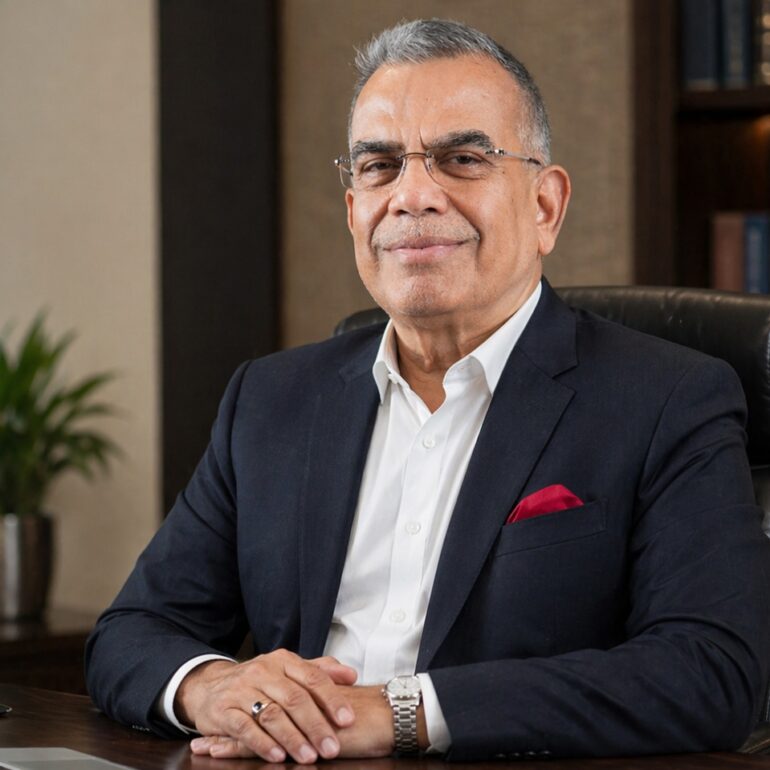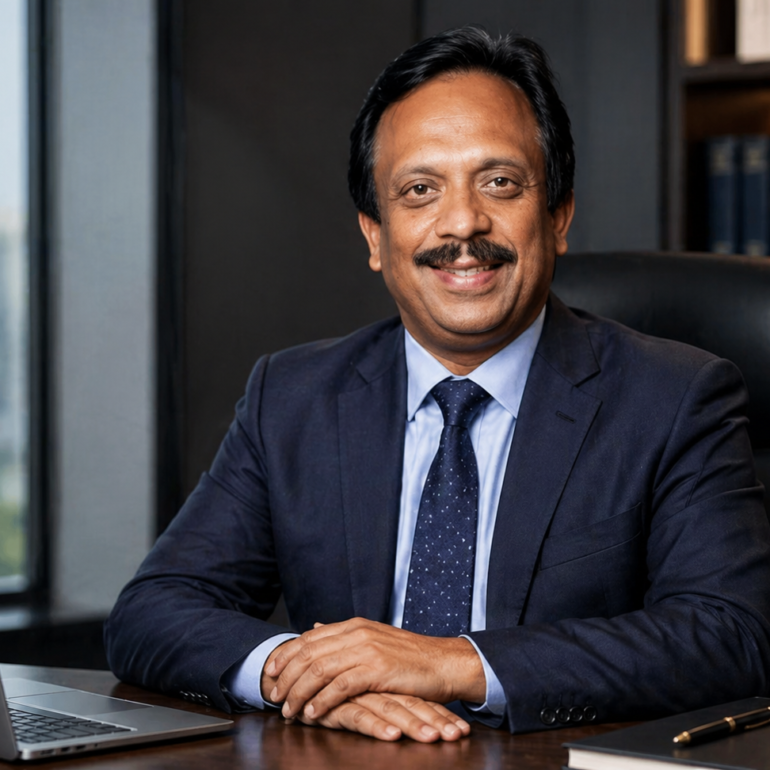
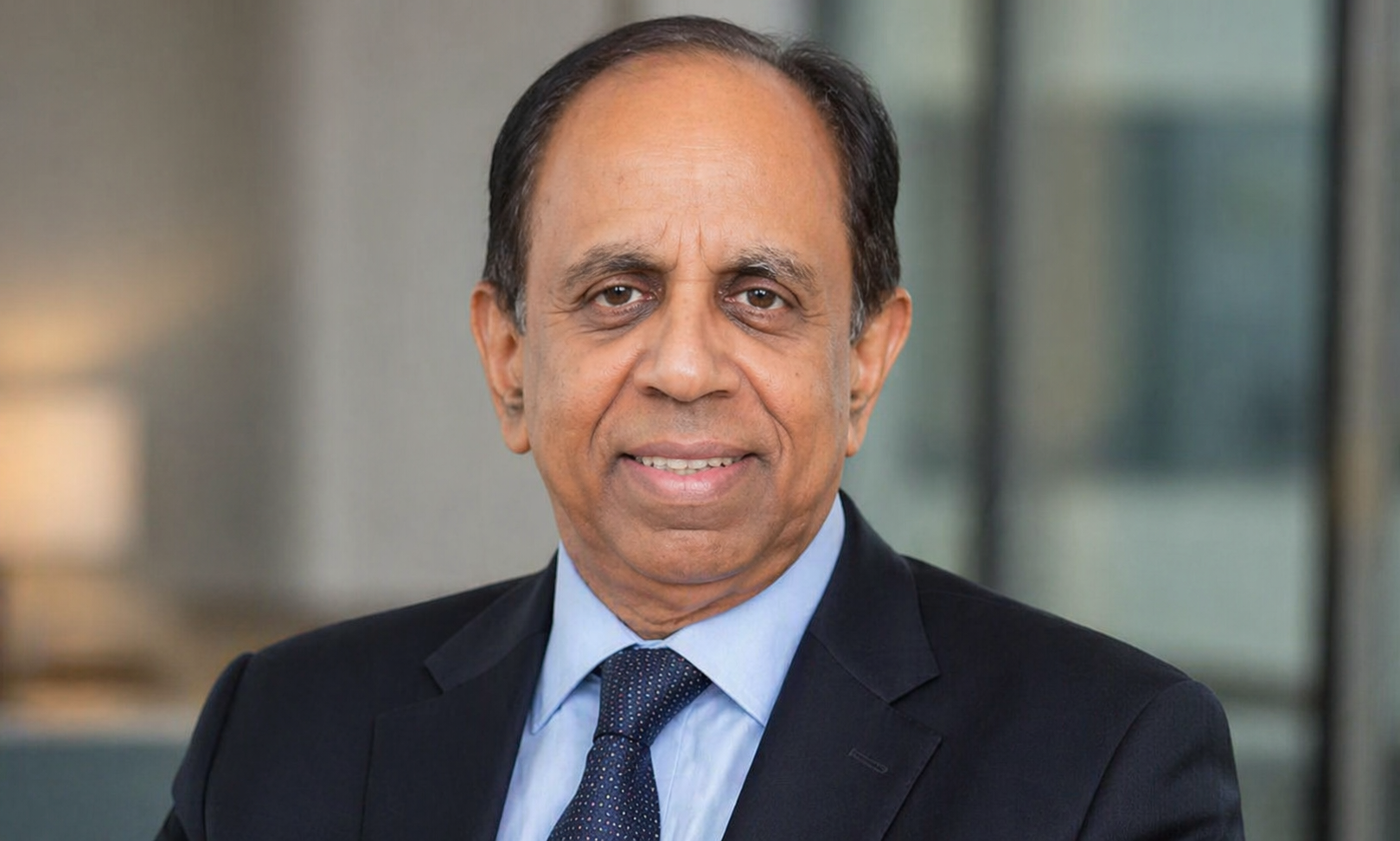
C. J. George
Founder and MD of Geojit Financial Services
Chenayappillil John George is an Indian businessman and philanthropist. He is the founder and managing director of Geojit Financial Services. George is also the executive committee member of the National Stock Exchange of India, National Securities Depository Limited, Managing committee member of ASSOCHAM, Director of V-Guard Industries, Director of Aster DM Healthcare and former Director of Federal Bank and Joyalukkas. He is also a charter member of the Financial Planning Standards Board India.
Key Facts
Name: C.J George
Place: Pothanikkad, Ernakulam, Kerala, India
Title: Indian businessman and philanthropist
From Trading Floors to Touchscreens
Before stock trading in India became a tap on a smartphone, it was a slower, noisier, and deeply physical process, paper slips, shouted bids, and long waiting times for confirmation. In Kerala, far from Mumbai’s Dalal Street, the idea of building a brokerage business in the 1980s was not just ambitious, it was uncertain. It is in that context that C. J. George founded Geojit Financial Services in 1987, a firm that would grow alongside India’s financial markets themselves. His journey reflects an outstanding continuity, adapting through liberalisation, dematerialisation, and digitisation without losing sight of a core philosophy: markets are long-term institutions, not short-term spectacles.
A Quiet Entry into Finance
C. J. George was born in Pothanikkad, a village in Kerala’s Ernakulam district, an environment far removed from the institutional centers of Indian finance. His early exposure to markets did not come through legacy or proximity, but through curiosity and gradual engagement.
He pursued higher education in commerce, equipping himself with a foundational understanding of finance and accounting. Like many early entrants into India’s brokerage ecosystem, his career began in an existing firm, where he learned the mechanics of trading, client servicing, and market operations. This period is critical to understanding his later decisions.
Pre-liberalisation India had a fragmented financial system. Trading was manual, regulations were evolving, and investor participation was limited. Working within this system required patience and adaptability. George absorbed these lessons early.
The Accidental Entrepreneur: Founding Geojit
In 1987, George co-founded Geojit along with Ranajit Kanjilal. The timing was significant.
India’s financial markets were still tightly regulated, and equity investing was far from mainstream. Starting a brokerage in such an environment was less about scaling quickly and more about survival.
The early years were marked by constraints. Limited technology, low investor awareness, and operational inefficiencies defined the business. Brokerage firms depended heavily on relationships and trust, rather than platforms or analytics.
Eventually, George took full control of the company. This transition from partnership to sole leadership marked a turning point. It allowed him to shape Geojit’s strategy more decisively, focusing on gradual expansion rather than aggressive risk-taking.
His approach was deliberate. Build steadily, avoid overextension, and align growth with market maturity.
Building Geojit: Scaling with the Market
The 1990s transformed India’s financial landscape.
Economic liberalisation in 1991 opened markets, increased foreign investment, and expanded the investor base. Institutions like the National Stock Exchange of India introduced electronic trading, replacing manual systems. Geojit aligned itself with these shifts.
The firm became a member of both NSE and Bombay Stock Exchange, expanding its reach beyond Kerala. It also adopted dematerialisation early, leveraging systems like National Securities Depository Limited to move away from physical share certificates.
This was a structural shift. Demat accounts reduced fraud, increased efficiency, and made trading more accessible. Firms that adapted early gained a competitive advantage.
Geojit also went public in the 1990s, raising capital to support expansion. Its growth model was measured.
Rather than rapid national scaling, it focused on building a strong regional base before expanding outward.
Early Moves in Digital Trading
One of George’s most significant strategic decisions was Geojit’s early adoption of online trading.
In the late 1990s and early 2000s, as internet penetration increased, brokerage firms faced a choice, remain dependent on physical branches or invest in digital platforms.mGeojit chose the latter.
It became one of the early players to offer internet-based trading in India, allowing clients to place orders remotely. This reduced operational costs and expanded accessibility.
The firm also diversified. Beyond equities, it entered commodities trading, mutual fund distribution, and wealth management. This diversification mirrored broader industry trends, where brokerages evolved into financial services platforms.
A key milestone was its partnership with BNP Paribas, which brought global expertise and credibility. Such partnerships were not merely financial. They signaled a shift toward institutionalization, aligning Indian firms with global standards.
Advisory Over Speculation
C. J. George’s leadership philosophy stands apart from the speculative culture often associated with stock markets. He has consistently emphasized long-term investing.
This is reflected in Geojit’s business model, which leans toward advisory-led services rather than pure transaction-based revenue. The distinction matters.
Discount brokers focus on volume, low-cost trades, and minimal advisory. Full-service firms like Geojit prioritize client relationships, research, and portfolio guidance.
George has maintained this positioning even as the industry shifted. His argument is structural. Markets require informed investors, not just active traders. This approach has strengths and limitations. It builds trust and long-term client relationships but may lag in attracting high-frequency, cost-sensitive traders.
Navigating Market Cycles and Industry Disruption
Over nearly four decades, George has navigated multiple market cycles.
The Harshad Mehta era, the dot-com bubble, the 2008 global financial crisis, and the COVID-era retail trading boom each reshaped the brokerage landscape. Each phase required adaptation.
Regulatory changes from Securities and Exchange Board of India tightened compliance and increased transparency. Technology reduced barriers to entry, intensifying competition.
The rise of discount brokers like Zerodha fundamentally altered the industry. Low-cost trading, mobile-first platforms, and simplified interfaces attracted a new generation of investors. For Geojit, this posed a challenge.
Competing on price alone was not viable. Instead, the firm adjusted its strategy, strengthening advisory services, expanding product offerings, and leveraging its existing client base.
This reflects a broader industry shift. Traditional brokerages are evolving into wealth management platforms.
Influence Beyond Geojit: Institutional Contributions
C. J. George’s influence extends beyond his company.
He has been associated with key institutions in India’s financial ecosystem, including roles connected to NSE and NSDL. These institutions have been central to modernizing India’s markets.
He has also served on corporate boards, contributing to governance and strategic oversight in other sectors.
Such roles indicate a broader engagement with the financial system. Not just as a participant, but as a contributor to its evolution.
A Conservative Operator
C. J. George is often described as a conservative leader. This is not a critique, but a strategic orientation.
His decisions tend to prioritize stability over rapid expansion. His communication style is measured, avoiding dramatic predictions or market speculation.
In an industry prone to volatility, this approach has built credibility. Among investors and industry peers, he is seen as disciplined and consistent. In the media, his visibility is limited compared to newer fintech founders.
This reflects a generational difference. His leadership was shaped in an era where performance mattered more than narrative.
Future Outlook: Endurance in a Changing Market
Today, Geojit operates in a vastly different environment from the one in which it was founded.
India’s capital markets have expanded dramatically. Retail participation has surged. Technology has redefined access and engagement.
The question for firms like Geojit is relevance.
Can a full-service, advisory-led model compete in a market driven by low-cost, high-volume trading?
The answer may lie in hybridization. Combining digital efficiency with human advisory.
C. J. George’s legacy is tied to this transition. He represents a generation that built the infrastructure of India’s brokerage industry, then adapted to its digitization. His contribution is not defined by disruption, but by continuity.
An outstanding example of leadership that evolves with the market, without abandoning its core principles, ensuring that as the medium of trading changes, the discipline of investing remains intact.
Associations
Executive committee member of the National Stock Exchange of India and National Securities Depository Limited
Managing committee member of ASSOCHAM
Director of V-Guard Industries
Director of Aster DM Healthcare
Former Director of Federal Bank and Joyalukkas
Charter member of the Financial Planning Standards Board India