Thomas Kurian
CEO of Google Cloud Platform
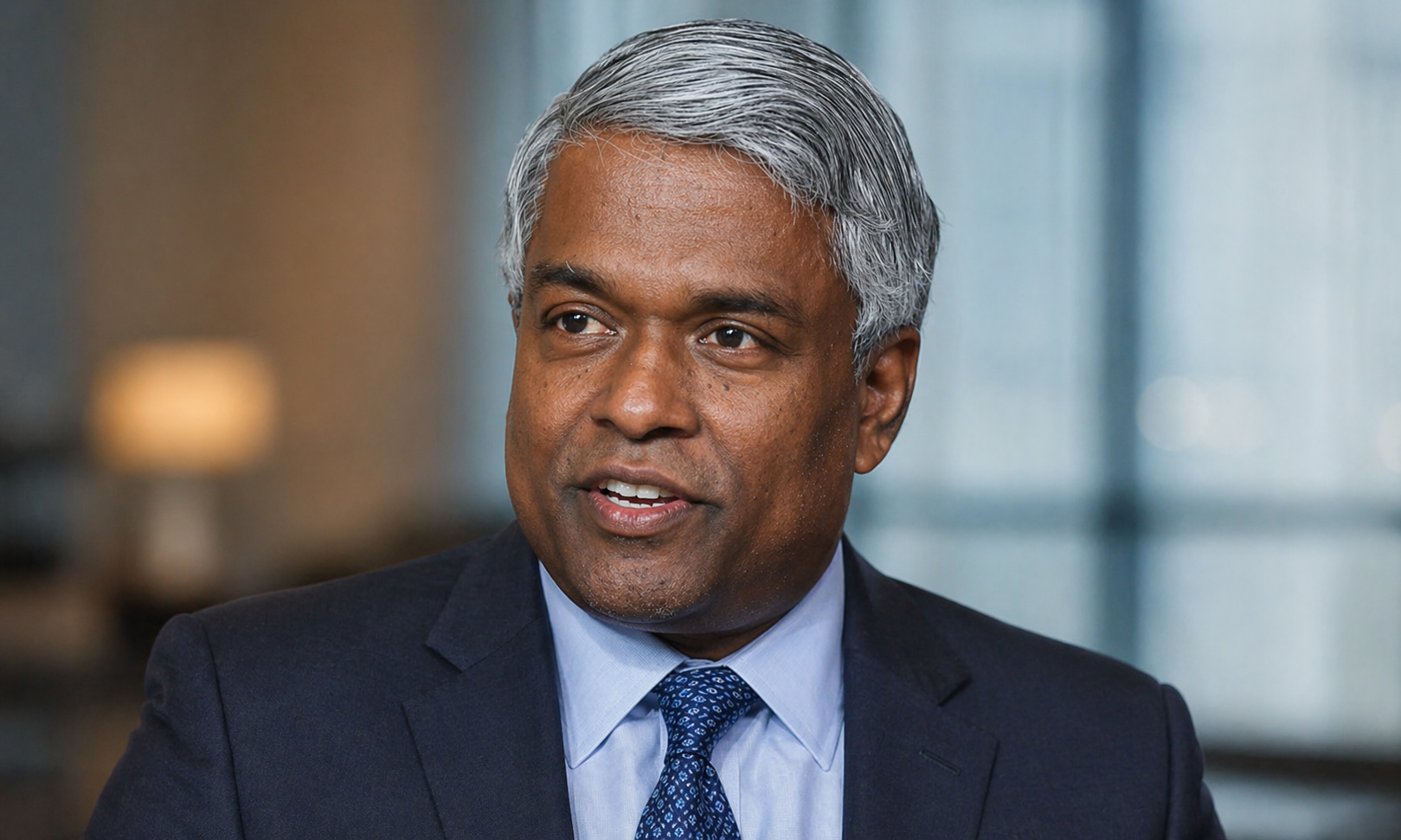
Thomas Kurian (born 1966) is an Indian-American executive who has served as the CEO of [Google Cloud] since 2019. He is credited with transforming Google Cloud into a major enterprise player and a strong growth engine for Alphabet, significantly expanding its market share and focus on AI and infrastructure
Key Facts
Born: 1966 (age 59–60)
Place: Pampady, Kerala, India
Education: Princeton University (BSE), Stanford University (MBA)
Title: CEO of Google Cloud Platform
Engineering the Shift Beneath the Surface
In the late 2000s, as the technology world turned its attention to cloud computing, much of the narrative centered on insurgents, Amazon rewriting infrastructure, Salesforce redefining software delivery. Yet inside Oracle Corporation, a different kind of transformation was underway, slower, more complex, and deeply tied to legacy systems that powered global enterprises. At the center of this shift was Thomas Kurian, a leader who rarely occupied headlines but shaped decisions that affected thousands of products and millions of enterprise users. His tenure represents an outstanding case of scale-driven leadership, where influence is measured not in visibility, but in the architecture of systems that quietly run the modern world.
From Kerala to Silicon Valley
Thomas Kurian’s origins lie in Kerala, India, a region that has produced a disproportionate number of global technology leaders. Alongside his twin brother, George Kurian, he grew up in an environment that emphasized education, discipline, and intellectual rigor.
His academic trajectory was precise and ambitious. He earned a degree in electrical engineering from Princeton University, where he developed a strong foundation in systems design and computational thinking. He then pursued an MBA from Stanford Graduate School of Business, positioning himself at the intersection of technology and management.
Before entering the technology industry, Kurian worked at McKinsey & Company. This phase is often overlooked, but it is critical.
McKinsey exposed him to global business strategy, operational frameworks, and the complexities of large organizations. It trained him not just to build products, but to think about markets, scale, and execution.
The Oracle Years: Rise of a Product Architect
Kurian joined Oracle in 1996, at a time when the company was already a dominant force in database software but was expanding into a broader enterprise ecosystem. His rise within the organization was steady, not meteoric.
Over two decades, he moved through increasingly complex roles, eventually becoming President of Product Development. In this capacity, he oversaw Oracle’s entire product portfolio, including databases, middleware, and enterprise applications.
At its peak, his organization included more than 35,000 engineers across over 30 countries. This scale is difficult to overstate.
Managing such a workforce requires not just technical expertise, but organizational architecture, processes, communication systems, and decision-making frameworks.
Kurian became, in effect, the central node in Oracle’s product universe.
Building Oracle’s Software Empire: Middleware as Strategy
One of Kurian’s most significant contributions was the expansion of Oracle’s Fusion Middleware.
Middleware, often misunderstood outside enterprise technology circles, acts as the connective tissue between applications, databases, and services. It enables integration, scalability, and interoperability across complex systems.
Under Kurian’s leadership, Fusion Middleware became a market-leading platform. It allowed Oracle to offer not just standalone products, but integrated solutions, databases, application servers, identity management, analytics, and more, all working together.
This integration was strategic. Enterprises prefer ecosystems over fragmented tools. By building a comprehensive stack, Oracle increased customer lock-in while delivering operational efficiency.
Kurian also oversaw Oracle’s enterprise applications, including ERP, CRM, and supply chain solutions, further strengthening its position as a full-stack enterprise provider.
The result was scale. Oracle became one of the largest enterprise software companies globally, with tens of billions in annual revenue.
The Cloud Transition: Strategy and Friction
The rise of cloud computing presented both an opportunity and a challenge for Oracle.
Competitors like Amazon Web Services, Microsoft Azure, and Salesforce were redefining how software was delivered. Instead of on-premise installations, software was moving to SaaS, PaaS, and IaaS models.
Kurian was among the leaders pushing Oracle toward this transition. He advocated for expanding Oracle’s cloud offerings, including SaaS applications and platform services. However, Oracle’s approach was cautious and, at times, conflicted.
The company had a strong legacy business in on-premise software, which generated significant revenue. Transitioning to the cloud risked cannibalizing these revenues.
There were also strategic disagreements. Kurian reportedly supported a more flexible, multi-cloud approach, while Oracle’s leadership, particularly under Larry Ellison, maintained a more centralized strategy.
This tension reflected a broader industry challenge. Legacy leaders must transform without destabilizing their core.
Oracle’s cloud efforts eventually gained traction, but it lagged behind hyperscale leaders in early adoption and market perception.
Discipline at Massive Scale
Kurian’s leadership style is often described as methodical and execution-focused.
He is not a charismatic public speaker or a media-driven executive. Instead, he operates through structure, clarity, and accountability. Managing 35,000 engineers requires systems.
He emphasized product roadmaps, release cycles, quality control, and cross-team coordination. His approach was deeply product-centric, prioritizing engineering rigor over marketing narratives. This sometimes created tension within Oracle’s traditionally sales-driven culture.
Enterprise software companies often rely heavily on sales to drive revenue. Kurian’s emphasis on product excellence introduced a different dynamic, aligning development more closely with long-term customer needs.
His leadership reflects a fundamental principle. At scale, discipline is more valuable than charisma.
Exit from Oracle: A Turning Point
In 2018, after more than two decades at Oracle, Thomas Kurian left the company. The departure was significant.
It followed a period of internal disagreements over strategy, particularly around cloud direction and organizational priorities. Kurian’s exit highlighted a structural reality.
Even highly influential leaders can reach a point where strategic alignment with the organization diverges.
For Oracle, it marked the end of an era in product leadership. For Kurian, it was a transition point.
Beyond Oracle: Reinvention at Google Cloud
Shortly after leaving Oracle, Kurian became CEO of Google Cloud. This move was strategic for both sides.
Google Cloud, despite strong technology, lagged behind AWS and Azure in enterprise adoption. It needed leadership with deep enterprise experience. Kurian brought exactly that.
He applied Oracle-style discipline to Google Cloud’s operations, focusing on enterprise customers, sales execution, and product alignment.
Under his leadership, Google Cloud expanded its enterprise footprint, improved revenue growth, and strengthened partnerships.
He shifted the narrative. From a technology-first cloud provider to a customer-focused enterprise platform.
The Kurian Paradox: Influence Without Visibility
Thomas Kurian represents a paradox in modern technology lleadership. He is highly influential, yet relatively low-profile.
Unlike figures such as Satya Nadella or Sundar Pichai, Kurian does not dominate public discourse.
This raises a question.
Is leadership defined by visibility or impact?
Kurian’s career suggests the latter.
He is a builder, not a storyteller. His influence lies in systems, products, and organizations, not in narratives.
The Infrastructure of Enterprise Computing
Thomas Kurian’s legacy spans two critical phases of enterprise technology.
At Oracle, he helped build one of the most comprehensive enterprise software ecosystems in history. His work in databases, middleware, and applications shaped how organizations manage data and operations.
At Google Cloud, he is contributing to the next phase, the shift toward cloud-native, AI-driven enterprise systems.
His impact is structural. He has influenced how software is built, integrated, and delivered at scale.
In the broader context of global technology leadership, Kurian represents a distinct model. Not the visionary disruptor, but the systems architect. Not the public figure, but the operational strategist.
As enterprise technology continues to evolve, his approach, disciplined, product-focused, and execution-driven, remains highly relevant.
That is his outstanding legacy. A career spent building and reshaping the infrastructure that underpins modern enterprise computing, quietly, precisely, and at extraordinary scale.