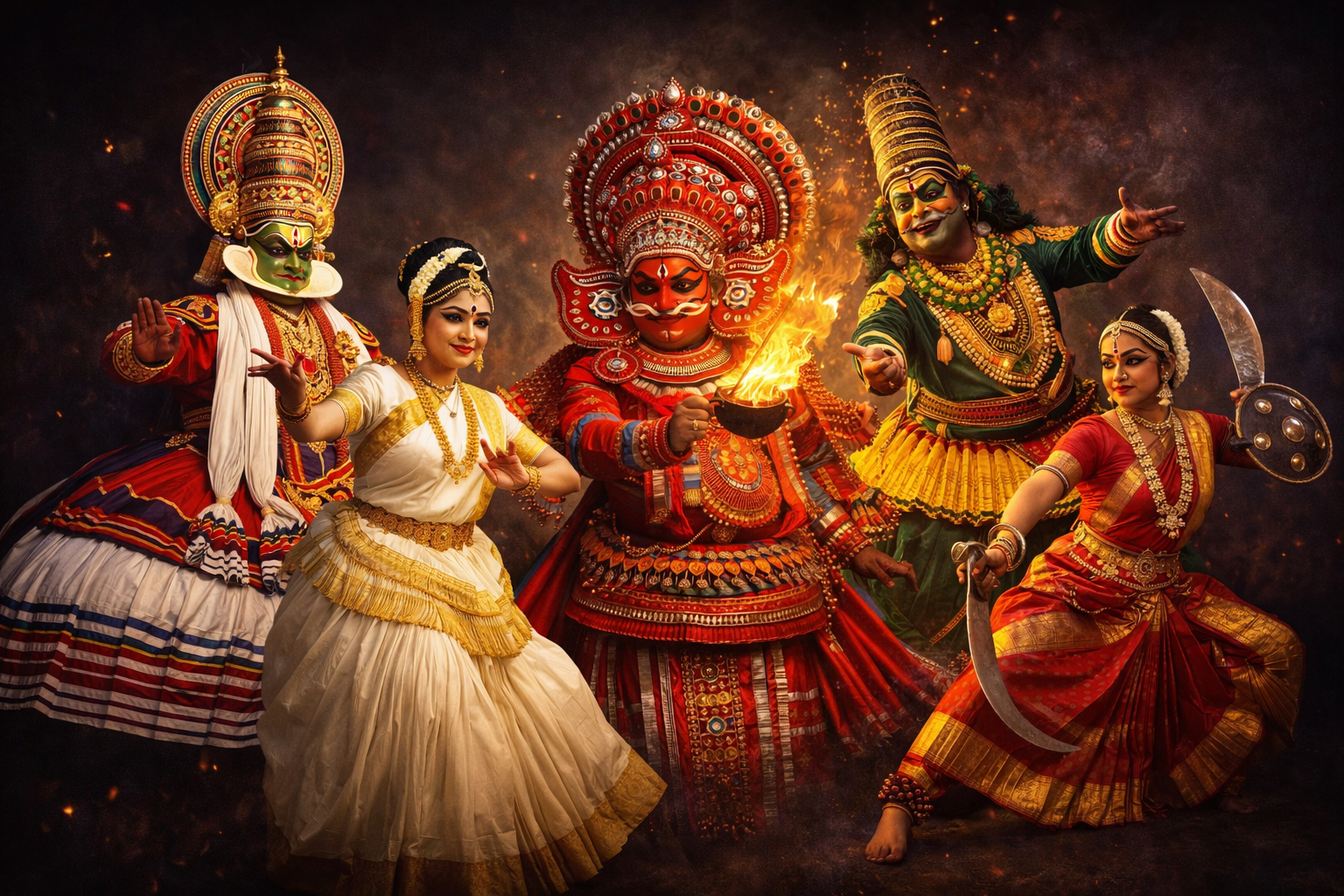
Top Dances of Kerala
The most iconic, widely known, and culturally rich dance forms of Kerala
1. Kathakali
2. Mohiniyattam
3. Theyyam
4. Thiruvathirakali (Kaikottikali)
5. Koodiyattam
6. Ottamthullal
7. Oppana
8. Chakyar Koothu
9. Kolkali
10. Margamkali
Outstanding Dances of Kerala
Kerala’s dance traditions are not just performances, they are living stories. From temple rituals and mythological storytelling to community celebrations and cinematic influence, dance in Kerala reflects history, religion, and everyday life.
The state is home to over 50 distinct dance forms, ranging from classical systems like Kathakali and Mohiniyattam to ritualistic and folk expressions like Theyyam and Oppana.
What makes Kerala unique is its outstanding diversity. Every dance has a purpose. Some are sacred offerings, some are storytelling mediums, and some are pure celebration.
This guide explores the most searched, well-known, and culturally important dance forms of Kerala.
1. Kathakali
Kathakali is the most iconic dance form of Kerala, globally recognized for its dramatic storytelling and elaborate visual style. Originating around 500 years ago, it is a complex blend of dance, theatre, music, and ritual.
The word “Kathakali” literally means “story-play,” and that is exactly what it delivers. Performers narrate epics like the Ramayana and Mahabharata through hand gestures, facial expressions, and body movements rather than spoken dialogue.
What truly sets Kathakali apart is its visual intensity. Dancers wear elaborate costumes, towering headgear, and detailed facial makeup that symbolizes different character types, heroes, villains, and divine beings. Each color and design carries meaning.
The performance is highly disciplined. Artists undergo years of training to master eye movements, expressions (navarasas), and precise gestures. Music and percussion, especially the chenda and maddalam, enhance the drama.
Kathakali is not just entertainment. It is an immersive theatrical experience rooted in spirituality and mythology. Today, it is performed in temples, cultural festivals, and global stages, making it Kerala’s most recognizable cultural export.
2. Mohiniyattam
Mohiniyattam is Kerala’s classical solo dance form known for its grace and femininity. The name comes from “Mohini,” the enchanting female avatar of Vishnu, symbolizing beauty and allure.
Unlike the dramatic intensity of Kathakali, Mohiniyattam is soft and fluid. It follows the Lasya style, characterized by gentle, swaying movements and expressive storytelling.
The costume is simple yet elegant, a white sari with golden borders, reflecting Kerala’s traditional aesthetic. The movements often resemble the rhythm of ocean waves, slow, controlled, and deeply expressive.
This dance focuses heavily on abhinaya (expression). The performer conveys emotions like love, devotion, and longing through subtle facial gestures and hand movements.
Historically performed in temples, Mohiniyattam later moved to stage performances and gained national recognition. Today, it is one of India’s classical dance forms. It represents the softer, poetic side of Kerala’s dance culture.
3. Theyyam
Theyyam is not just a dance, it is a ritual transformation. Predominantly performed in North Kerala, it is one of the most powerful and visually striking art forms in India.
The word “Theyyam” comes from “Daivam,” meaning God. In this performance, the dancer is believed to become the deity.
The costumes are intense, towering headgear, intricate face paint, and vibrant red tones. Performances often involve fire, drumming, and trance-like movements.
Unlike classical dance, Theyyam is deeply rooted in local folklore and community traditions. Each Theyyam represents a specific deity or ancestral spirit, often linked to stories of justice, sacrifice, or resistance.
It is performed in sacred groves and village temples, making it a spiritual and cultural event rather than a staged performance.
Theyyam is raw, immersive, and deeply emotional. It reflects Kerala’s indigenous belief systems and social history.
4. Thiruvathirakali (Kaikottikali)
Thiruvathirakali is one of the most popular group dances in Kerala, performed mainly by women.
It is closely associated with the Thiruvathira festival, dedicated to Lord Shiva. Women dance in a circular formation around a traditional lamp, clapping rhythmically and singing devotional songs.
The dance is simple yet elegant. Movements are synchronized, creating a visual rhythm that reflects unity and celebration.
Costumes are traditional Kerala attire, white and gold sarees, adding to the aesthetic harmony.
Thiruvathirakali is less about technical perfection and more about community bonding. It is performed in homes, temples, and cultural events.
It represents the social and festive spirit of Kerala, where dance becomes a shared experience.
5. Koodiyattam
Koodiyattam is one of the oldest surviving theatre traditions in the world and is recognized by UNESCO as an intangible cultural heritage.
It is a Sanskrit theatre form performed in temple theatres called Koothambalam.
The performances are highly detailed and slow-paced. A single act can take days to complete, focusing on deep character exploration.
Actors use exaggerated facial expressions and hand gestures to convey emotions and narratives.
Koodiyattam is not just a dance. It is a blend of drama, ritual, and classical performance.
It represents Kerala’s deep connection to ancient Indian theatre traditions.
6. Ottamthullal
Ottamthullal is Kerala’s most entertaining dance form. Created by poet Kunchan Nambiar, it combines dance, music, and satire.
Unlike classical forms, Ottamthullal is simple and accessible. It uses humor to critique society and politics.
The performer narrates stories from mythology while adding witty commentary and social criticism.
The costume is vibrant and exaggerated, matching the playful nature of the performance.
Ottamthullal is proof that art in Kerala is not always serious. It can be sharp, funny, and deeply relevant.
7. Oppana
Oppana is a traditional dance of Kerala’s Muslim community, especially in the Malabar region.
It is usually performed during weddings, where women dance around the bride, singing rhythmic songs.
The dance is graceful and celebratory, focusing on clapping, simple movements, and group coordination.
Oppana reflects cultural diversity in Kerala, blending music, dance, and community rituals.
8. Chakyar Koothu
Chakyar Koothu is a solo storytelling performance rooted in temple traditions.
The performer narrates mythological stories with dramatic expressions, humor, and commentary.
It is performed inside temple theatres and is known for its intellectual and satirical tone.
Chakyar Koothu is less about dance and more about expressive storytelling through movement and speech.
9. Kolkali
Kolkali is a rhythmic group dance performed with sticks.
Dancers move in circles, striking sticks in synchronized patterns, creating a musical rhythm.
It is energetic, coordinated, and visually engaging.
Kolkali represents Kerala’s folk traditions and communal spirit.
10. Margamkali
Margamkali is a traditional dance of Kerala’s Christian community.
It is performed in a circular formation around a lamp, symbolizing spiritual unity.
The dance narrates the story of St. Thomas and early Christianity in Kerala.
Margamkali highlights Kerala’s multicultural identity and historical depth.
Final Step
Kerala’s dances are not just performances. They are identities.
Kathakali brings drama.
Mohiniyattam brings grace.
Theyyam brings intensity.
Thiruvathirakali brings community.
Together, they create a cultural rhythm that is both ancient and alive.
If you really want to understand Kerala, don’t just visit. Watch its outstanding dances.