Top Music of Kerala
The most iconic, widely known, and culturally significant music traditions of Kerala
- Carnatic Music in Kerala
- Sopana Sangeetham
- Chenda Melam & Temple Percussion Music
- Kathakali Music
- Mappila Paattu
- Vanchipattu (Boat Songs)
- Pulluvan Pattu
- Naadan Pattu (Folk Songs)
- Malayalam Film Music
- Contemporary & Fusion Music
Outstanding Music Culture of Kerala
Kerala’s music is not one thing, it’s a layered ecosystem. It moves from temple chants to cinematic soundtracks, from tribal rhythms to global fusion. What makes it unique is continuity. Music here evolved from early Malayalam poetic traditions and ritual performances, gradually branching into classical, folk, and modern forms.
At its core, Kerala’s music is deeply tied to life itself. There are songs for worship, harvest, love, storytelling, and even daily labor. Over time, these forms have expanded into structured systems like Carnatic music and globally recognized art forms like Kathakali music.
This article explores the most searched, well-known, and culturally important music forms of Kerala.
1. Carnatic Music in Kerala
Carnatic music is the backbone of Kerala’s classical music tradition. Though it originated across South India, Kerala played a major role in shaping and popularizing it, especially during the reign of Swathi Thirunal Rama Varma, one of the greatest royal composers in Indian history.
This form is built on a structured system of ragas and talas, creating highly disciplined yet expressive compositions. In Kerala, Carnatic music is not confined to elite concert halls. It is woven into temples, festivals, and even household traditions.
What makes Kerala’s Carnatic scene distinct is its emotional depth. The style here often leans toward bhakti, devotion, making performances feel more spiritual than technical.
Training in Carnatic music is rigorous. Artists spend years mastering voice control, improvisation, and composition. Kerala has produced legendary singers like K. J. Yesudas, who brought classical elements into mainstream music.
Today, Carnatic music continues to thrive through festivals, music schools, and digital platforms. It remains the most respected and foundational music form in Kerala.
2. Sopana Sangeetham
Sopana Sangeetham is Kerala’s own classical music system, deeply rooted in temple traditions. The word “Sopana” refers to the steps leading to the sanctum, where this music was traditionally performed.
Unlike Carnatic music, Sopana is minimalistic. It focuses on slow, deliberate notes and emotional expression rather than complexity. The music is usually accompanied by instruments like the idakka and chengila, creating a soft, meditative atmosphere.
This form is closely tied to rituals. It is not performed for entertainment but as an offering to the deity. That gives it a spiritual intensity that is hard to replicate elsewhere.
Sopana also influences other art forms, especially Kathakali, where its style shapes the musical narration.
Even today, temples like Guruvayur preserve this tradition. It remains one of the purest expressions of Kerala’s musical identity.
3. Chenda Melam & Temple Percussion Music
If Kerala has a heartbeat, it’s percussion. Chenda Melam, Panchavadyam, and Thayambaka are powerful ensemble music forms performed during temple festivals.
These performances are intense. Dozens, sometimes hundreds, of musicians play together, building rhythm layer by layer. The chenda drum leads the composition, supported by cymbals, horns, and other instruments.
The structure is mathematical yet emotional. Rhythms gradually increase in tempo and intensity, creating a hypnotic effect on the audience.
Events like Thrissur Pooram showcase this music at its peak, where sound, crowd, and visual spectacle merge into one experience.
Unlike classical music, this is collective energy. It is loud, immersive, and deeply communal.
4. Kathakali Music
Kathakali music is not standalone. It exists as part of the larger Kathakali performance, one of Kerala’s most iconic art forms.
The music is dramatic and narrative-driven. It follows Carnatic ragas but is delivered in a style influenced by Sopana traditions.
Singers stand behind the performers, narrating the story through powerful vocals, while percussion instruments like chenda and maddalam drive the rhythm.
What makes Kathakali music unique is synchronization. Every beat, note, and pause aligns with the actor’s facial expressions and gestures.
It is not just music. It is storytelling through sound.
5. Mappila Paattu
Mappila Paattu is the traditional music of Kerala’s Muslim community, especially in the Malabar region.
These songs are a fusion of Malayalam, Arabic, and Persian influences, creating a distinct musical identity.
They are often performed during weddings and social gatherings, especially alongside dance forms like Oppana.
The themes range from love and devotion to history and community life. Musically, they carry elements of Hindustani styles, making them different from other Kerala traditions.
Mappila Paattu is more than music. It is cultural memory preserved through rhythm and poetry.
6. Vanchipattu (Boat Songs)
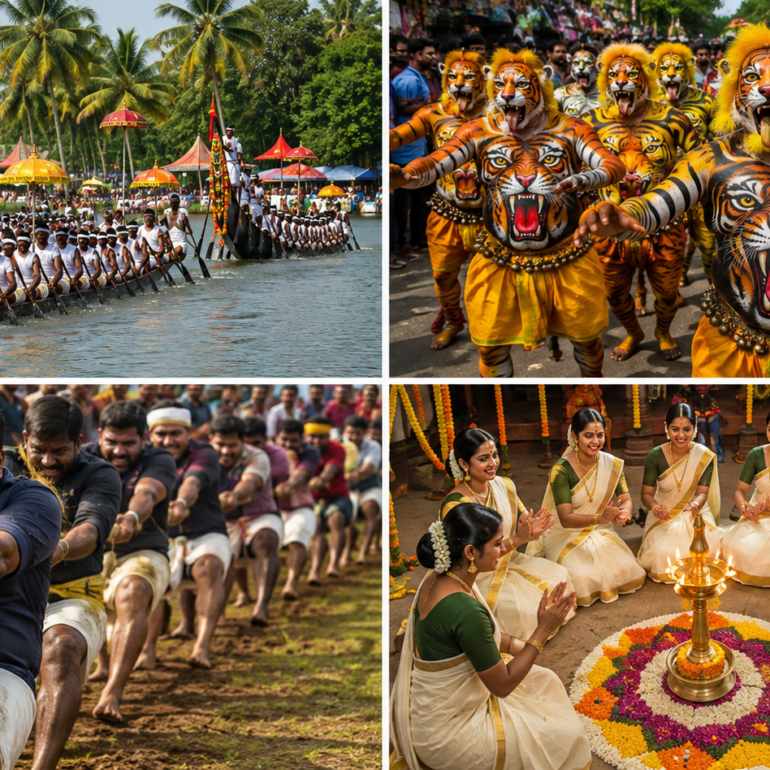
Vanchipattu, or boat songs, are one of Kerala’s most energetic music forms. They are performed during snake boat races, especially in Alappuzha.
The songs are rhythmic and synchronized with rowing. Each beat matches the movement of oars, turning music into coordination.
These songs often celebrate heroism, teamwork, and local pride. The tempo is fast, creating an electrifying atmosphere during races.
Vanchipattu represents community spirit. It is music designed for collective action.
7. Pulluvan Pattu
Pulluvan Pattu is a ritualistic music form associated with serpent worship in Kerala.
Performed by the Pulluvan community, these songs are part of rituals like Sarpam Thullal and Kalamezhuthu.
The music is deeply spiritual, often performed in sacred groves or homes. Instruments like the pulluvan veena create a haunting, trance-like sound.
These songs are believed to invoke divine energy and are closely tied to fertility and protection rituals.
Pulluvan Pattu is one of the oldest surviving music traditions in Kerala, rooted in indigenous beliefs.
8. Naadan Pattu (Folk Songs)
Naadan Pattu refers to Kerala’s traditional folk songs, the music of everyday life.
These songs are simple, melodic, and deeply connected to community experiences. They are sung during farming, festivals, and social gatherings.
Themes include love, labor, mythology, and humor. Unlike classical music, these songs are not bound by strict rules.
They represent the voice of the people. Raw, emotional, and authentic.
9. Malayalam Film Music
Malayalam film music is the most widely consumed music form in Kerala today.
It blends classical, folk, and global influences, creating a rich and diverse soundscape.
Legends like K. J. Yesudas and modern composers have taken Kerala’s music to global audiences.
Film songs are part of daily life, played at weddings, festivals, and personal moments.
This is where tradition meets modernity.
10. Contemporary & Fusion Music
Kerala’s music is evolving. Contemporary artists are blending traditional sounds with rock, jazz, and electronic music.
Bands like Thaikkudam Bridge have popularized Kerala fusion globally.
This genre often reinterprets folk songs and classical ragas in modern formats.
It reflects a new Kerala, rooted in tradition but open to the world.
Final Rythm
Kerala’s music is not just diverse. It’s layered across time.
Ancient rituals, temple chants, folk rhythms, cinematic melodies, and global fusion all exist together.
If you listen closely, you’ll notice something.
Every form, no matter how modern, carries a trace of something older.
That’s the magic of Kerala’s music. It never really leaves its roots.